


The USA has Entered Another Space Race

The United States is once again in a race to the moon, but this time the competitor is not the Soviet Union. Instead, it is China, a rising global power with ambitious plans to establish a long-term presence on the lunar surface. Decades after the Apollo era defined American dominance in space, a new chapter is unfolding. This modern space race blends government ambition with private sector innovation, and it carries implications that go far beyond symbolic achievement.
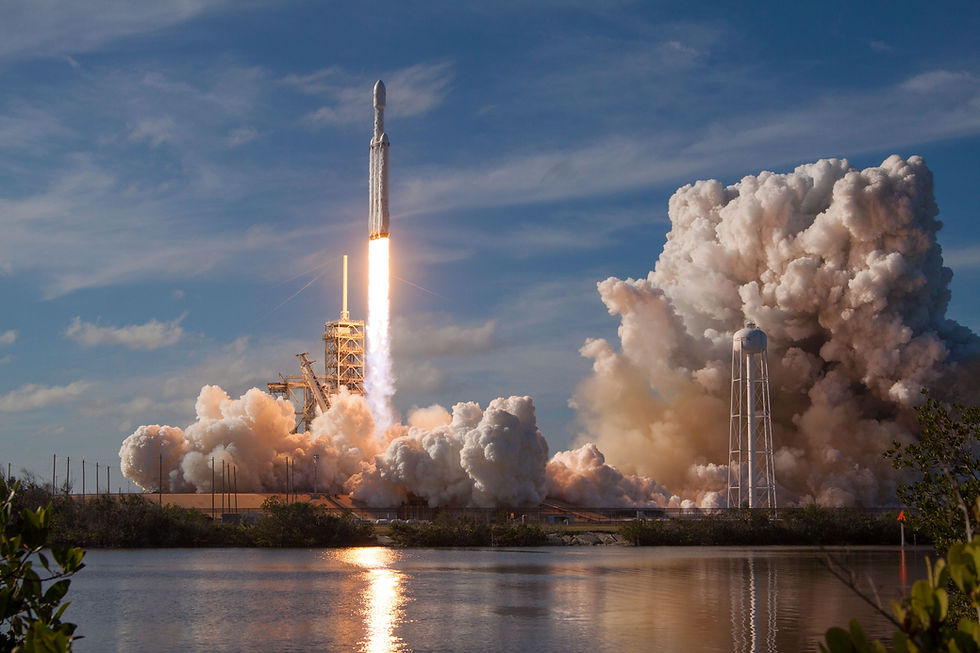
At the center of America’s effort is NASA’s Artemis program, with the Artemis II mission marking a critical step forward. Artemis II is designed to send astronauts around the moon for the first time since 1972, serving as a proving ground for the systems that will eventually land humans on the lunar surface again. While Artemis I demonstrated the capability of the Space Launch System and Orion spacecraft in an uncrewed mission, Artemis II represents a return to human exploration in deep space. It signals that the United States is not just experimenting, but preparing to reestablish a sustained presence beyond Earth orbit.
Alongside NASA’s efforts, private companies have become essential players in this renewed push. SpaceX has continued to launch and refine its Starship vehicle, which is expected to play a key role in future lunar landings. Starship is designed to carry both cargo and astronauts, and its development reflects a broader shift toward reusable, cost-effective spaceflight. Blue Origin, founded by Jeff Bezos, is also contributing through its work on lunar landers and heavy-lift rockets. These companies are not just contractors. They are partners shaping the future of American space capability.
This combination of public and private momentum stands in contrast to China’s state-driven approach. China has made significant strides in its own lunar program, including robotic missions that have successfully landed on the moon and returned samples to Earth. Chinese officials have made clear their intention to land astronauts on the moon within the next decade and to establish a permanent research base in partnership with other nations. For the United States, this presents both a technological and strategic challenge.
The parallels to the first space race are difficult to ignore. During the Cold War, the competition between the United States and the Soviet Union was about more than reaching space. It was about demonstrating technological superiority, ideological strength, and global leadership. The Apollo 11 moon landing became a defining moment that cemented America’s position as the world’s leading space power. Today, the stakes are similarly high, even if the geopolitical landscape has changed.
American leaders view a return to the moon as critical for several reasons. First, there is the question of national prestige. Being the first to establish a sustained human presence on the moon sends a powerful message about innovation and capability. Second, there are economic considerations. The moon is believed to contain valuable resources, including rare earth elements and water ice that could support future space missions. Establishing an early foothold could provide long-term advantages in what may become a new frontier for industry and commerce.
There is also a strategic dimension. Space is increasingly seen as a domain that will shape military and security dynamics in the coming decades. Control over key infrastructure in space, including potential lunar bases, could influence communication networks, navigation systems, and even defense capabilities. By leading in lunar exploration, the United States aims to set the rules and standards that will govern this emerging environment.
Unlike the first space race, this new competition is not purely a two-player contest. It involves alliances, commercial partnerships, and international collaboration. NASA has worked with a coalition of allied nations through agreements that outline principles for peaceful exploration and resource use. This approach reflects an effort to build a coalition-based model of space leadership, in contrast to China’s more centralized and state-controlled strategy.
Even so, the urgency is real. Timelines matter, and delays in American programs could open the door for China to claim key milestones first. Artemis II and the missions that follow are not just technical achievements. They are part of a broader effort to ensure that the United States remains at the forefront of space exploration.
The renewed push to the moon is about more than revisiting a past achievement. It is about shaping the future. Just as the original space race defined a generation and altered the course of history, this new race will help determine who leads in science, technology, and global influence in the decades ahead. America has entered another space race, and the outcome will have consequences that reach far beyond the lunar surface.



Comments